I’ll be referring to my life now in two distinct eras: Pre- and Post-Dewey. and I feel like I’m starting to get my sea legs under me now that I’ve entered this Post-Dewey universe. For CogTools, I’ve been reading two books that have some overlapping characteristics but more distinctly different than most of what we have been reading. I’ve finished Etienne Wenger’s Digital Habitats: Stewarding Technologies for Communities and I’m caught up with Clay Shirky’s Here Comes Everybody, which I’m thrilled we are reading because it’s a book that’s been on my purgatory short list of books-to-read for some time now.
Digital Habitats is one of those “file away” books for all the right reasons. It’s chalk full of charts, tables, and reference tables necessary for one to walk someone through a technology decision. This is incredibly helpful because it turns out people’s need are complex (!). What I appreciate about Wenger is that he takes a very academic approach and tacks on a very business-like approach over the top. This helps one form arguments that both the IT department and faculty can mutually agree upon. As a campus digital steward, I spend a significant part of my time getting these two parties come to an agreement (I’ll ignore that this usually doesn’t put the student first or second).
I think something we’ll have to address overtime is how to do we teach students to embrace their inner digital steward. The number of interactions with technology now is so high that we all have to do it. While Digital Habitats focuses on evaluating the technology concerns of groups and communities, it doesn’t spend a lot of effort on the individual. A couple years ago I found myself overwhelmed as my digital file fingerprints became stretched across several platforms: on my laptop, Dropbox, Evernote, Google Drive, external hard drives, etc. At times, I found myself unable to locate a file because I was using all platforms for the same end: creating documents. I had to devise my own methodology for deciding what tool to use when: Laptop = large files, Dropbox = main storage for most documents, Google Drive = documents I want to share, Evernote = article saving, external hard drive = backup, meaning it has to exist somewhere else as well. This allows me to not only know what tool is most effective but where things exist and its incredibly important and highly unlikely to scale past me as someone is bound to disagree with my model including myself as I’ve changed it over time. How do we shepherd students into taking into consideration how they choose tools and how to effectively evaluate that use over time?
Learning together is a complex achievement that weaves communal and individual engagement, aspirations, and identities. – Wenger, Digital Habitats
The best hacks start out as personal solutions to the author’s everyday problems, and spread because the problem turns out to be typical for a large class of users.
Another piece that Digital Habitats had me consistently thinking about was how to work in environment where technology adoption happens so often. It’s easy to find yourself adopting for the sake of being on the front edge, and Wenger makes a really good point that I’ve never thought of before on how this can affect the community.
Communities of practice have too much work to do to afford much faddishness. If some members are overeager to jump into every new possibility, how do we temper their enthusiasm when it threatens the cohesion of the community?
This reminded me of a time about a year ago where everyone was downloading the Mailbox iPhone app simply because you had to wait. It was revered for its ability to get you to a mythical state of “inbox zero” as if this were some moment of zen. I downloaded it thinking it would revolutionize my life only to find out 1.) I am not the type of person who cares to use the Archive feature as I search my inbox often and 2.) It didn’t even work with my work mail server rendering it practically pointless. But what if I would have recommended this to others with little reflection on what it did for me? What if I would required my department to utilize it? What if I hadn’t dropped it and decided to work within the confines of the new shiny app?
I think its important as the world’s current tech stewards to be mindful of individually practicing what we preach communally. I believe the best path to mass adoption is modeling it in a way that the community finds valuable from a production and consumption perspective. For me, right now at least, that means scaling back. For instance, I’m trying to focus more on free, cloud-based tools and purging the apps on my laptop I don’t use enough. I also did an iPhone app purge the other day and moved all “distractor” apps off my front page in hope that I would stop surfing Facebook and Instagram when it, at times, does more harm and good. It been amazing to already see how often I look down at my phone in the car and realize I don’t have any buttons I need to push.
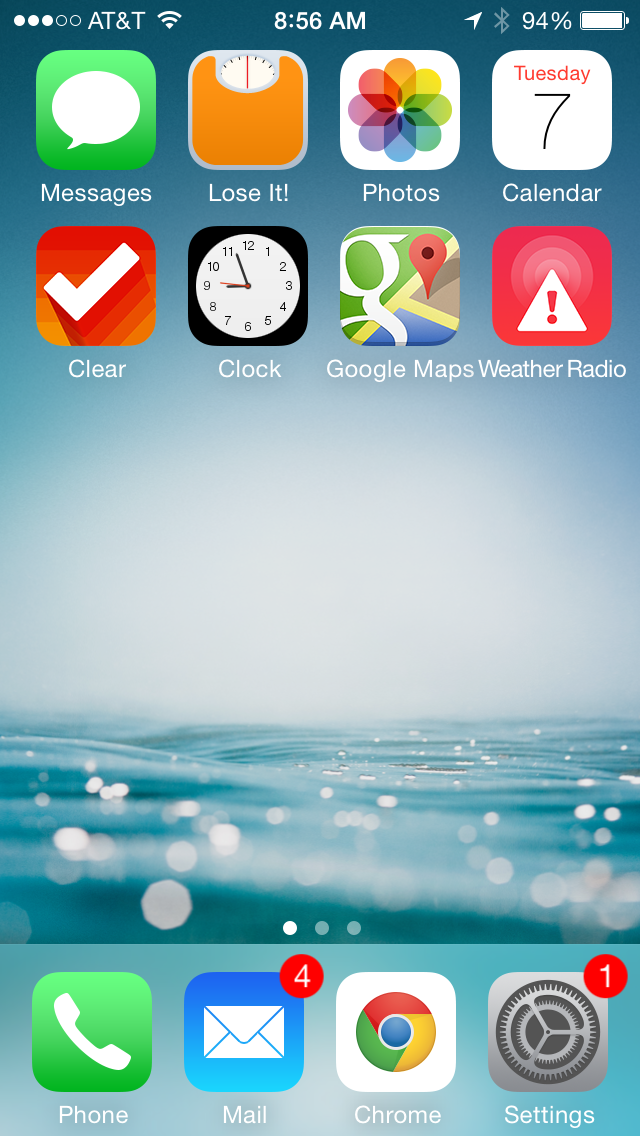
So for other cadre mates that might run across, how to do steward yourself? Do you find yourself doing “technology spring cleanings” occasionally? Has your use of tech ever overwhelmed you?