I haven’t done the best job of documenting the work that I’ve been doing on Action Research. I’ve been meaning to make multiple small posts, but have decided to opt for quality* over quantity. Early on I changed my research action project into something that would resonate more in my instructor capacity. I’ve been given the opportunity to develop a course I’ve taught previously face-to-face as a fully-online course, which is great considering the College of Journalism doesn’t have an extensive collection of online offerings. Knowing that the college might look at this as a model for future offerings, I want to make sure that I built it in a way that took into consideration current discipline teaching methodologies. My research has currently existed around the following circles: constructionism (a version of Constructivism which has roots in Seymour Papert), online public relations courses, the use of blogs/e-portfolios within online courses, and feedback within online courses. In essence, I would boil it down to the pedagogy, the discipline, the technology, and the feedback loop.
My original intention was mapped out in this logic model:
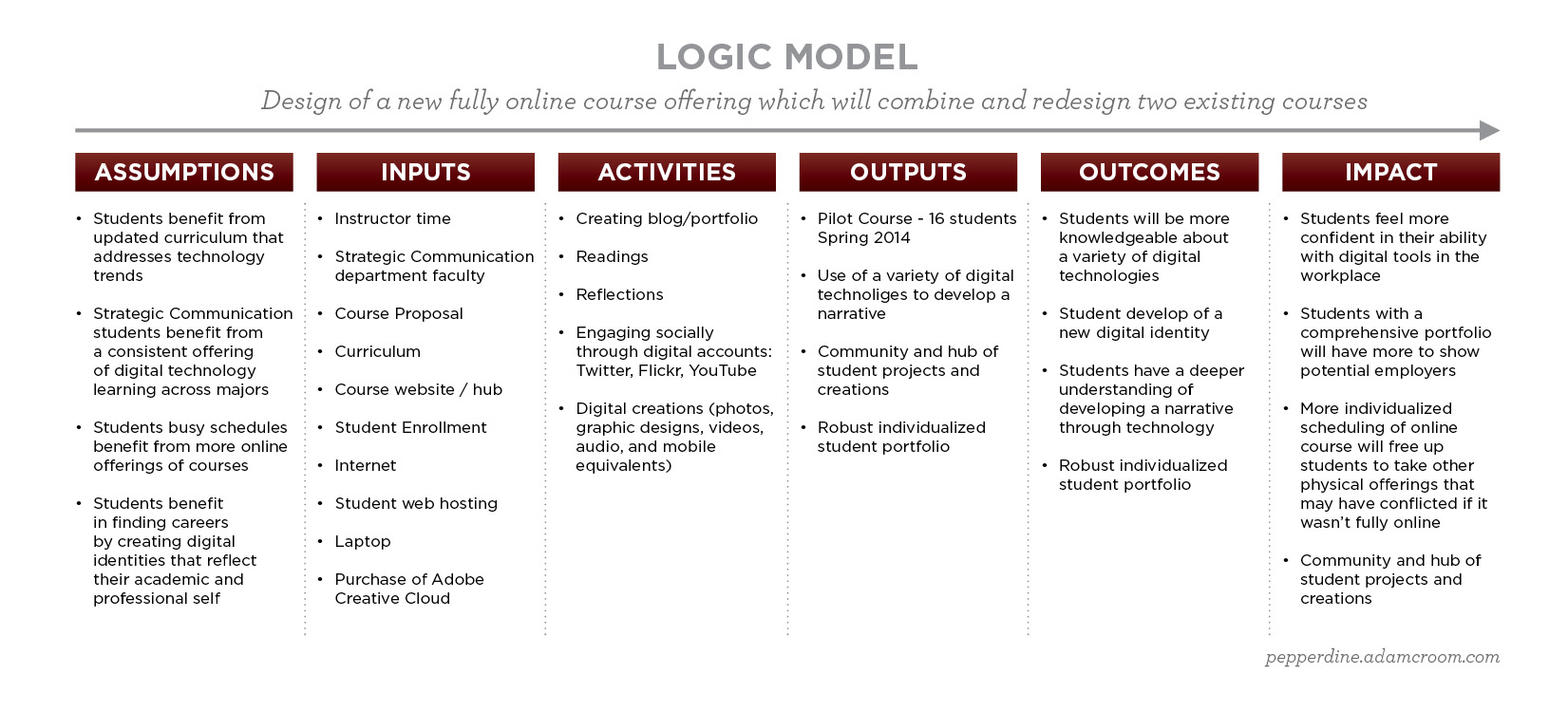
This exercise allowed me to flesh out all the different stakeholders but was too broad for me to really formulate good feedback cycles given all the players. This was feedback I received from other cadre mates which was very helpful considering I tend to see everything from a 50,000 foot view. Then the other day, Simon had a really good post on reading You and Your Action Research Project and narrowing the research plan to something you can directly effect. This led to two things: 1.) me reading through the book (great idea! 🙂 and 2.) me narrowing my focus down to not how compelled other instructors or the college would be but simply making a learning experience that students feel is valuable. Is there merit on it being online? Absolutely. But rather than understanding a transition to online I want to rethink the way its taught entirely and make sure its simply effective. Because of this, I’ve began to focus less on discipline research and more on the pedagogy (mostly constructionism).
This has led to me spending time reflecting and formulating the question:
Problem: Public Relations students feel inadequately prepared as practitioners to leverage the necessary technology tools they feel their job will require.
Possible solution: Course redesign that integrates new media
Library search terms: pedagogy in Public Relations, constructionism, constructivism, e-portfolios, social media, online teaching and learning
Outcome: Increase student confidence in work preparedness
Research Question: Will a course with new media techniques increase student confidence in work preparedness?
Defining the action
I am going to redesign the course to be an online course where students are immersed in the technology of trade for its entirety and take a “learn by doing” approach. In doing so, I want to get a more comprehensive understanding of online PR tools, commonly adopted pedagogy techniques both from within the discipline and outside with a particular emphasis on constructionism and online learning.
One anecdotal piece of evidence I wanted to point out. I started doing more research on Seymour Papert. This led me to a website called dailypapert.com which gives daily posts on work from Papert. I wanted to read the about page of the guy who felt compelled to do it and his name is Gary Stager, who has worked directly with Papert. Later, I wanted to go one step further so I started looking to see if there has been anything written on specific instances on constructionist techniques applied in online areas. This led me to a paper titled: “TOWARDS A PEDAGOGY OF ONLINE CONSTRUCTIONIST LEARNING” by none other than Gary Stager. What really took me back was that this was actually written about the Pepperdine MALT program (then the PMAET program”). As I came to learn from the paper, Stager was integral in the initial launch of the program. I started looking around more and realized he’s an author of the Invent To Learn book we’ve been reading for the Design strand. AND THEN MY HEAD EXPLODED as the universe was completely aligned.
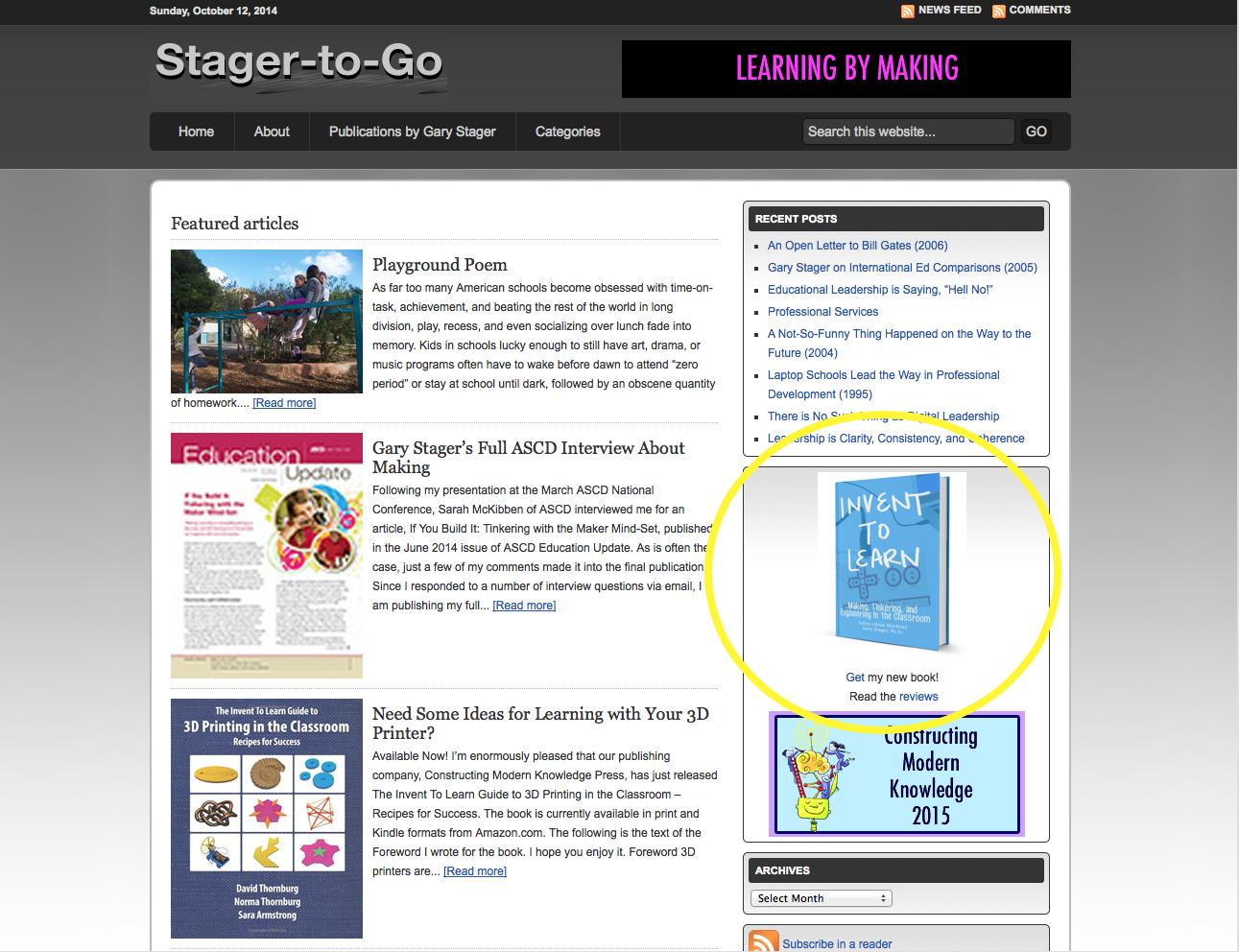
So it just might mean that I will end it leveraging the MALT model for research during MALT to teach (#metamalt). And I might have a direct link to someone who is incredibly thoughtful about the approach. Not bad!
*which is relative of course. I’ll let you be the judge there.