So I’m currently working on coding some data qualitatively as evidence for my action cycles. As I’ve mentioned in previous posts, the blog posts of my students have been harvested so that I could look closer at how they were writing. The first method was with the LIWC tool which gives a sort of “output” to their work in certain categories. I’m now going back and coding these reflection blogs to see where students are reflecting on a specific piece of a connected learning design or learning principle. After reading the Connected Learning Research Article in the Design strand, I noticed that Connected Learning gave me a framework of values that I like to see in my classes. The six principles are: production-centered, peer supported, interest oriented, shared purpose, openly networked, and academic oriented.
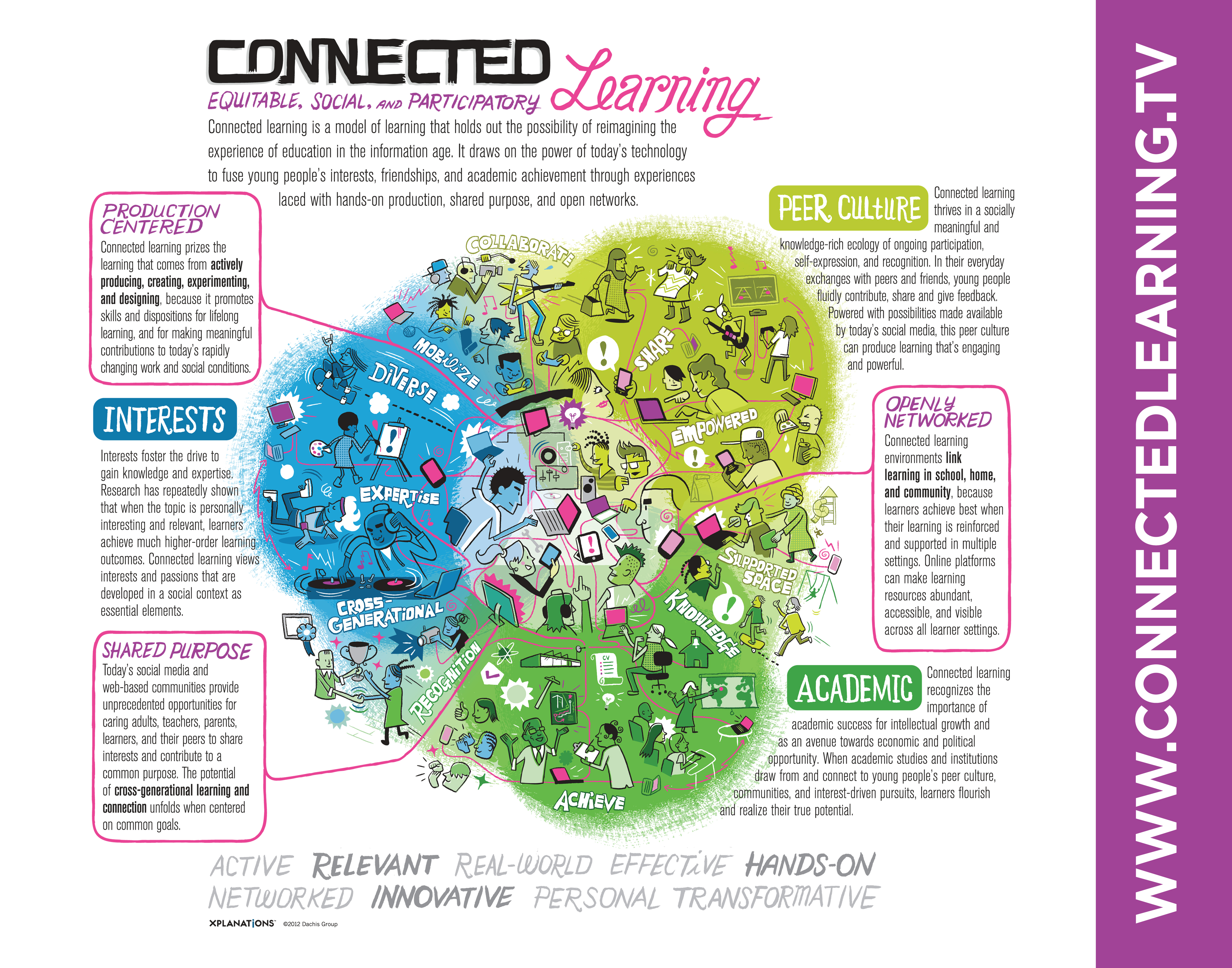
While I’m coding each individual principle, I am deeply reflecting on one specific principle per cycle. Cycle 1 was peer feedback and Cycle 2 is Production-Centered. I chose production-centered because this cycle requires the students to produce two direct mailers (essentially post cards) to a potential OU student. But the trick with this project is that they have been given the constraint of only being able to use Photoshop (even though they just spent four weeks with Adobe InDesign). My cycle questions were the following:
- How do students reflect on this constraint?
- What solutions (if any) do students turn to complete the project?
- What are the differences between students who reflected on this project positively and negatively?
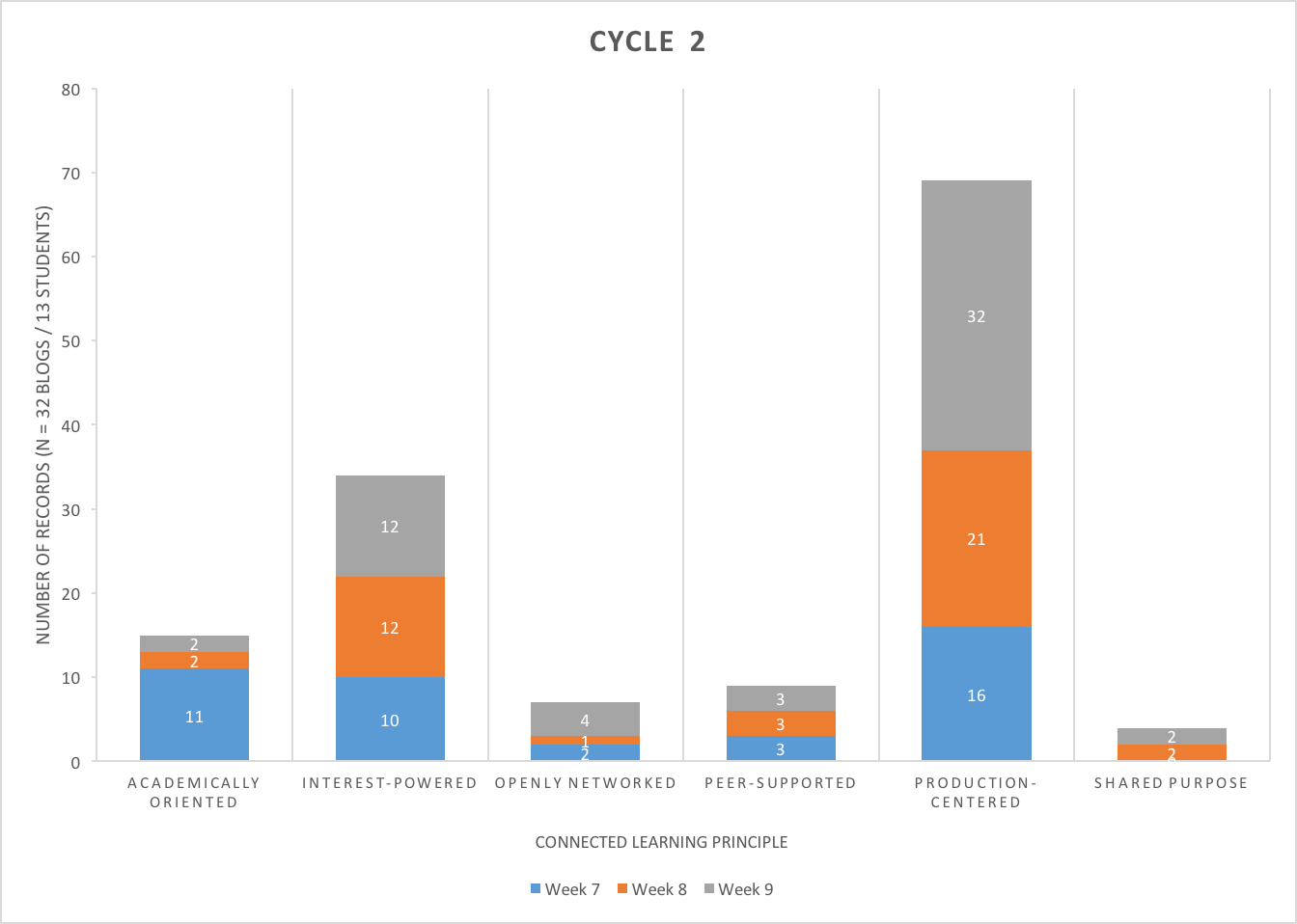
The next thing I did was pull out the 69 records that I labeled “Production-Centered” and see the different variations in which students were reflecting on that principle. The definitions can vary and this helps to get a sense of both what I’m characterizing as “production-centered” as well as the frequency of how it came up. I categorized them as students simply reflecting on the design itself, desiring to produce higher quality work, enjoying the process of production, struggling with production, reflecting on overcoming a struggle, and pride.
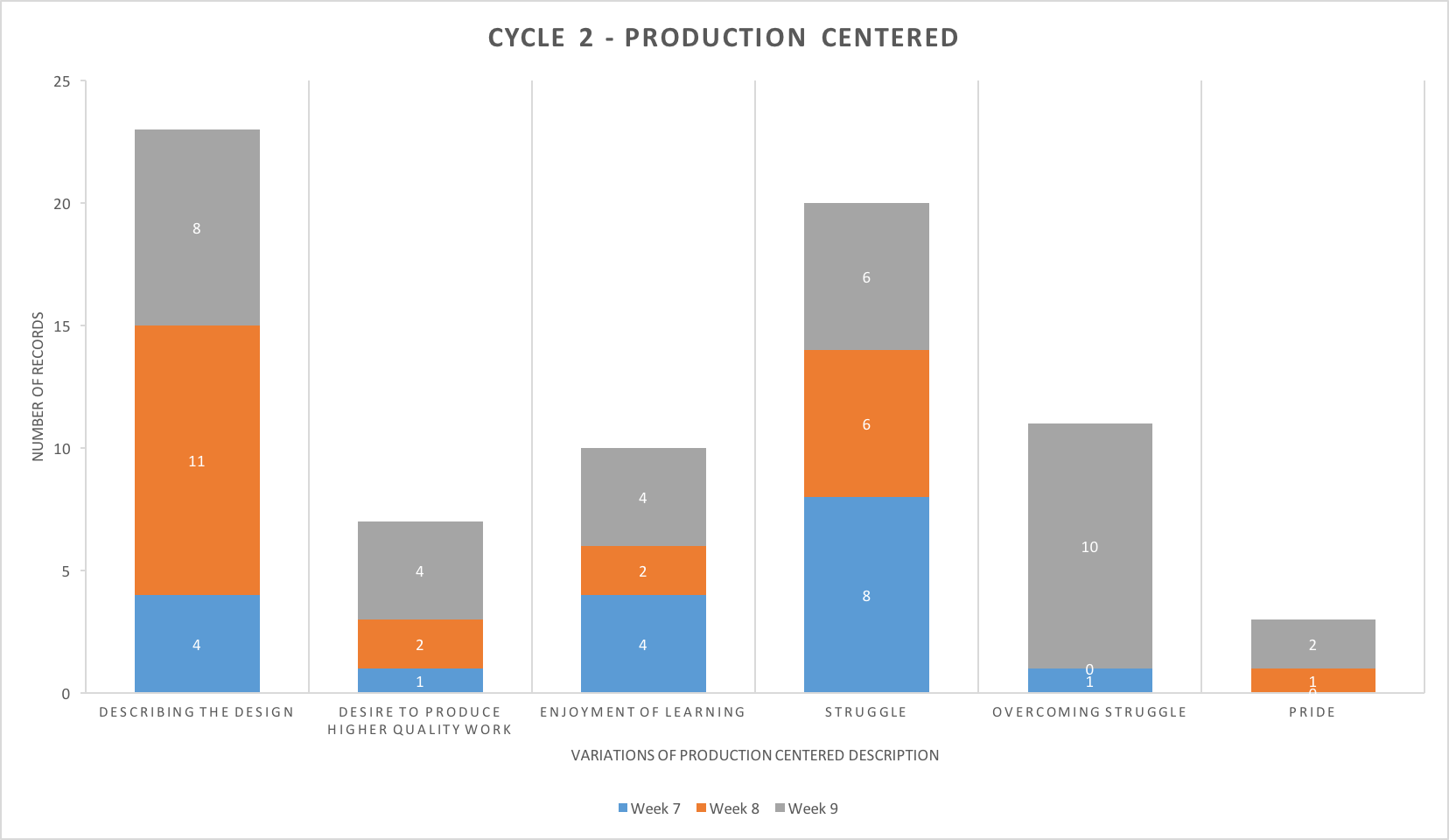
The stack bar graph shows the different weeks. This data shows that students spent the early part of the cycle describing the design but moved on to describing the process of the design in later weeks. While we see 14 students characterize a “struggle” early on, we see 10 students reflect on overcoming that struggle in the last week of the cycle.
A few observations that I was able to garner from the data:
- Some students felt that a bigger constraint on them wasn’t necessarily the application, but the fact that they didn’t have access to the type of or quality of photo that they wanted. Multiple students went so far to say they wished they knew photography because they would have preferred to just simply take the photo themselves. I interpret this as production centered produces a desire more for production centered. It was good to see how students saw that their work could be improved and they actually had possible solutions to it.
- Prior to beginning the design phase, they did a research phase, and I would code these reflections as “Academic.” Multiple students shared that this process was helpful and drove their designs.
- Students turned to Lynda.com, Pinterest, and other openly networked sites as places where they could get “unstuck.” These provided inspiration or a tutorial on how to complete a project. Leverage the open network propelled the production.
- There was a strong narrative of a struggle with the program and this was mildly anticipated, though my hypothesis wouldn’t have labeled it as “strong.” I attribute part of this to the fact that during this cycle there were a couple snow days which essentially took away a weeks worth of the project. I think students needed more time within the Photoshop environment.
- That said, there was a narrative of overcoming this struggle. One thing I hear about a lot are “goldilocks” assignments: not too easy, not too hard. I am okay that this project was slightly harder for them because I believe it created a stronger reflection of pride from students who felt they had put a lot of effort into their work.
- Peer support helped curb the struggle. This is bleeding over from Cycle 1, but I got the sense that designs were more likely to be revised if they felt the critique that they had received from peers warranted significant changes. This came up a few times.
- Last, I believe that interest in the project drove excitement and pride in the student’s reflection. Students were allowed to choose who the recipient of the direct mailer was and students had to be very specific. Often I found that students chose recipients who deeply reflected themselves. One student mentioned that he wanted to design the direct mailer he wish he would have received in high school. The other interest that drove the project was if a student was interested in learning more about Adobe Photoshop because they either felt it would be valuable to them professionally or it was something they genuinely have been wanting to learn.
My overall reflection is interesting on this one. Production is this class and the class revolves around this process. As I look back at the observations made, I see that the production center process drew out all of the other principles. Students used open networks to learn how to do better work. They revised work because of peers. The project was less daunting if students had engaged a personal interest in the purpose of the design. Last, if students could connect it to something that could help them academically or professionally it was beneficial. I’m starting to reframe the idea of Connected Learning with production being the catalyst that makes the rest of the framework turn.