For the past month, we’ve been playing video games to better understand gamification. I became particularly attached to Portal, a puzzle game set in a first-person shooter world. I’ve decided to leverage what I’ve learned from how Portal was built to see if I could apply that to a class I teach in our College of Journal called PR Publications. Enter NS3000. (Note: In the post, I’ll refer to the old, physical class as PR Pubs and the fictional online simulation course as NS3000). 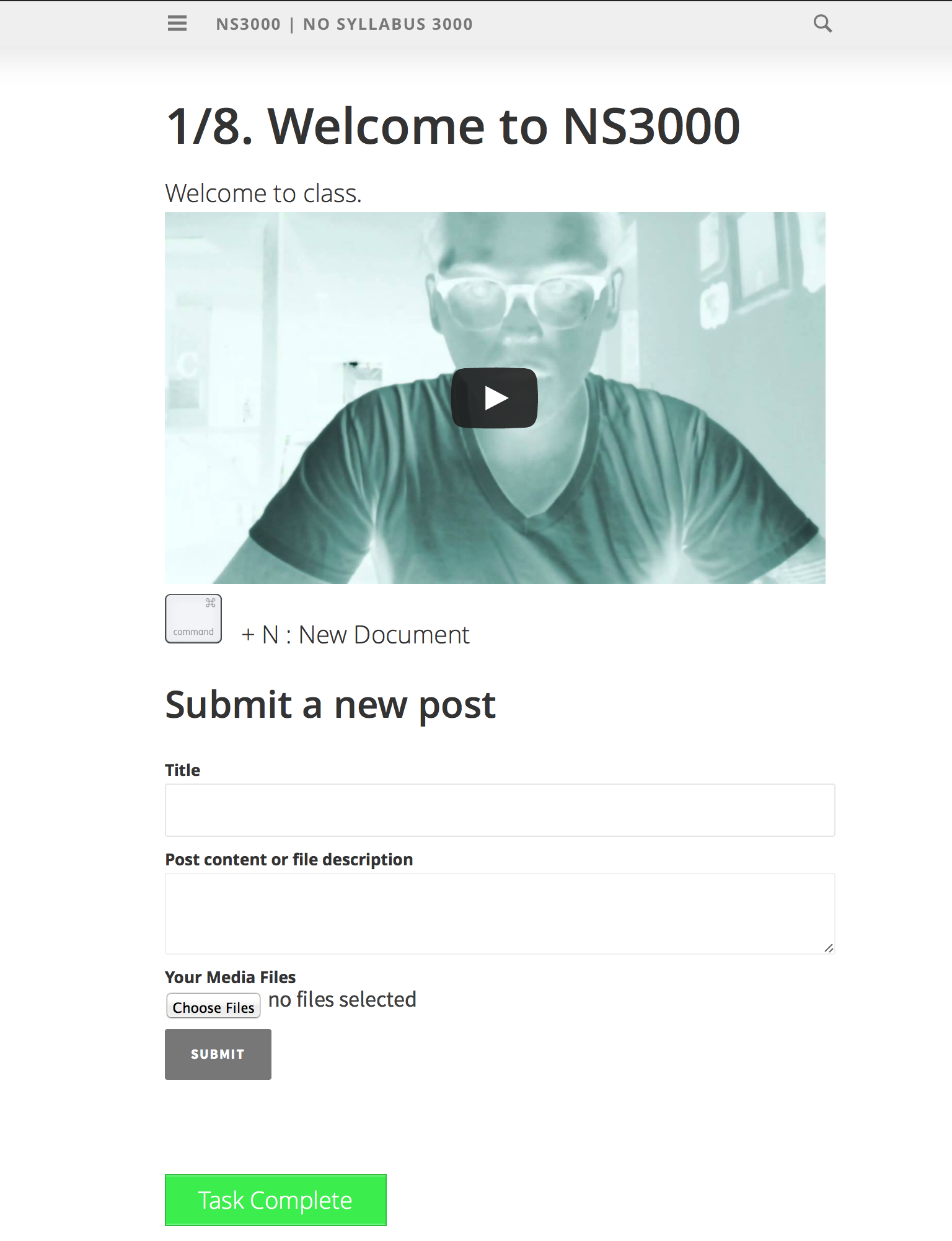
1. No Syllabus (NS) 3000
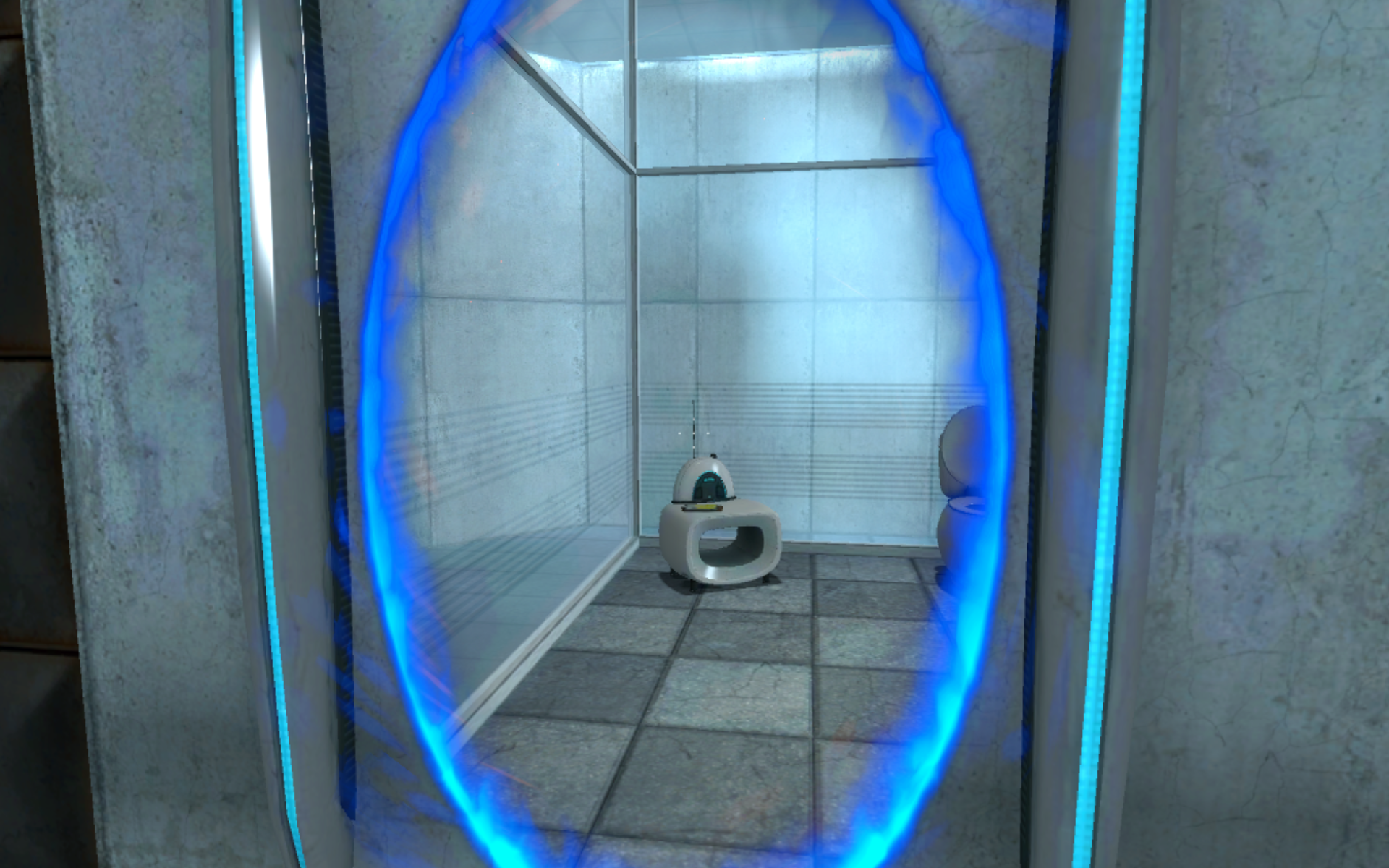
The original premise for this idea was when I thinking about how quickly Portal puts you in the gameplay. There isn’t a video montage introduction to set the scene. There are no immediate directions on how to play. You just end up in a room and you learn as you go.
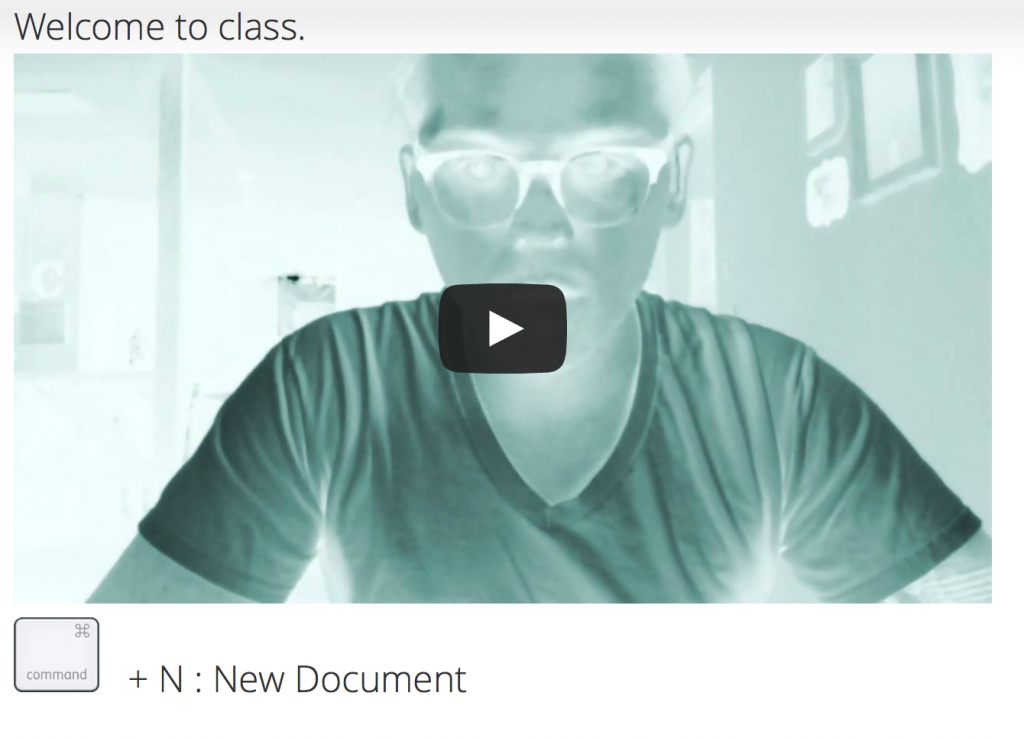
In one of my earlier blog posts I asked what would it be like if you removed the road map and students entrusted that the journey you took them on would be worth not knowing the destination. I began asking people around what would happen if I had a class that didn’t have a syllabus? This question was not received incredibly well since the syllabus is a required piece of the college classroom. This also meant that this is a perfect hypothetical question for grad school. 🙂 So you can visit http://pepperdine.adamcroom.com/ns3000 and see my best crack at the first lesson of “no syllabus” class. Rather than a syllabus, the scene is set with a quick video from your professor. You are greeted by Professor Moorc, a department head at the University of God’s Country and subsequent nemesis of who you thought you had–Professor Croom. Moorc has taken over for the semester because he wants Croom to focus on working on his tenure application. Professor Moorc takes on a personality very similar to GladOS from Portal. Moorc’s guides you along through Adobe InDesign projects, but his goals are sort of unclear. From what you can tell, they are partially to build your skills so you can build the image of the college and so he can inevitably submit your work for awards, though he tries to sell you this plan that it’s to build your professional skills and resume.
In a traditional setting, if you think about how student’s interpret a syllabus, what they are usually doing to interpret via the syllabus how much energy they will have to exert to get the grade they desire. I’ll talk later on how I attempt to curb this in the project.
2. Bottom-Up Approach
Pedagogically, the method that is used in NS3000 to teach InDesign is the exact opposite of how I’ve done it before in PR Pubs. In PR Pubs, the first couple of assignments I have students do is recreate an already finished piece. They are essentially trying to reconstruct an advanced product. I usually find one that has several tasks that are good for students to know that way they can see the range of InDesign early. Additionally, I usually do a one day tutorial of InDesign where I show them where all these tools are. As you can imagine, it doesn’t take long for students to inevitably forget everything I teach them that first day and thus have trouble later on when they try to recall the information. Oddly enough, Bill shared a Lifehacker article on Facebook that talked about the different of these styles on days earlier. It too called for more “bottom up” approaches to learning coding rather than the “top down” method you see where you learn by creating full products.
In Portal, you start off with levels where the tasks are incredibly easy. Nevertheless, they are very foundational to understanding the game. For instance, the first one is picking up a cube and dropping it on a button that will open a door. You’ll end up doing this nearly every subsequent level and thus important to understand its concept. Slowly throughout the game, the level of difficulty required to be able to actually pickup the cube and properly move it to the button gets tougher and tougher as more variable added such as your portal device, flinging, high energy pellets, etc. My first PR Pubs assignment is to development a business card. This is simply because a business card is a small amount of surface area to work on so it doesn’t require a lot from the students. I started by deconstructing how you actually build the business card and then made that into 8 different steps:
- Creating the document
- Defining the document size and margins
- Placing text
- Adding color
- Adding images
- Adding gradients
- Photo effects such as image clipping path
- Adding a back side to the business card
For NS3000, I turned each one of these steps into a subsequent level within NS3000. Rather than creating one final document each time, students actually upload each step along the way. This reinforces the critical foundational steps like the New Document Dialogue box. Eight levels also gives students eight different opportunities for feedback along the way rather than the one time they would get feedback if they just turned in a finalized business card. Professor Moorc is giving you positive feedback at every step (though, again, we aren’t exactly clear that his motives are aligned with our own).

I appreciated how much of the game Portal dedicated to teaching you how to be effective within the game. You were being rewarded simply for understanding how the game worked and, as a player, that made you feel really good.
3. Hints
Portal is clearly a game where its mission is very literally for you to succeed. In doing so, as I wrote about in a different post, they created an environment that is very purposeful. There are subtle hints like glowing red dots on the ceiling where you should shoot a portal. Additionally, the first time you ever have the opportunity to do a foundational piece of the game such as pick up an object, open a door, crawl, shoot a gun, etc. it subtly tells you how to perform that task. Rather than having to keep a cheat sheet with you of all the different controls, Portal bakes these right into the gameplay.
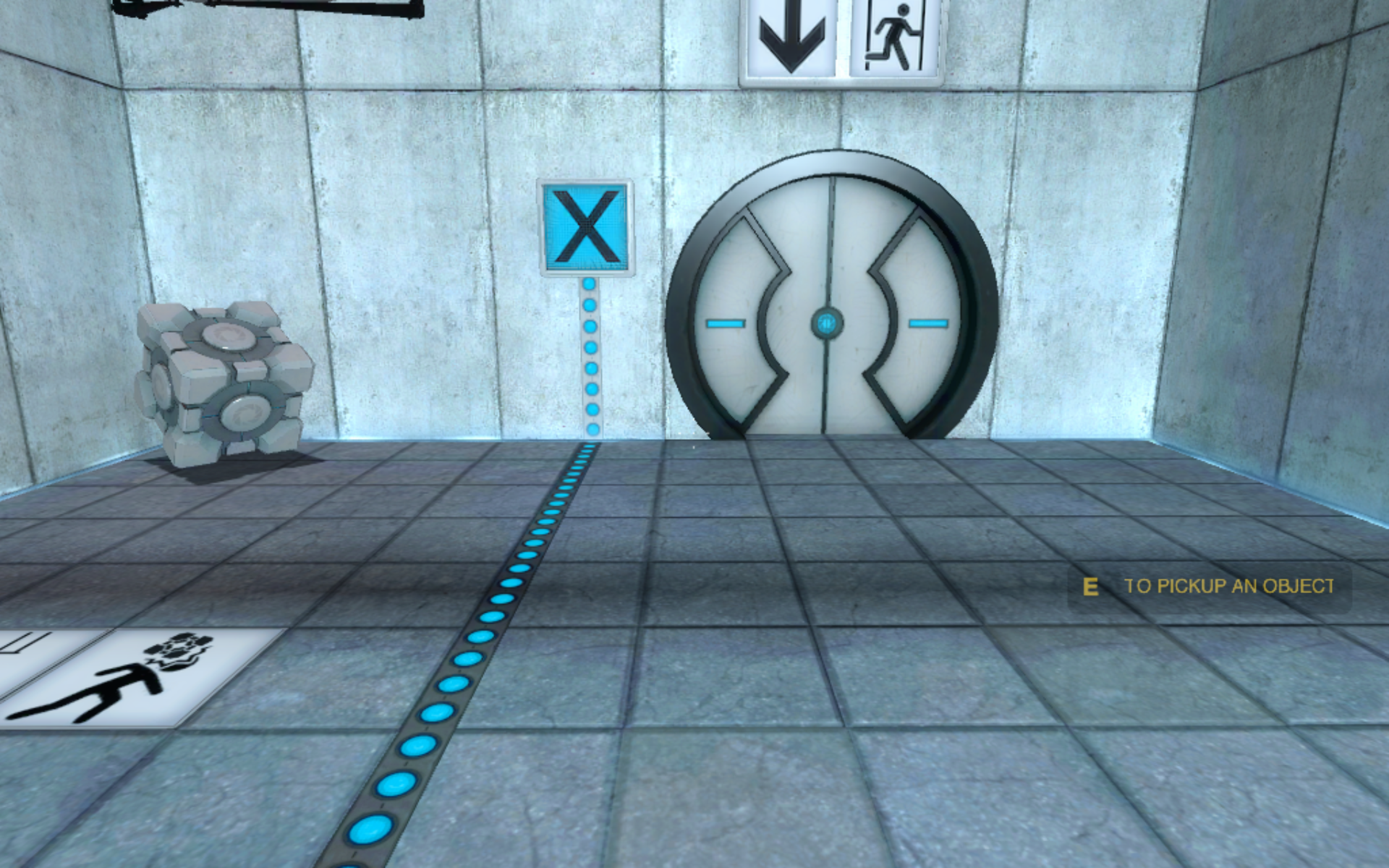
These have been added to NS3000 as well. Every time a student will perform a new task, I tell them the shortcut they need to know to perform it or I may point out the tool on the toolbar that they will use, but I’m not necessarily telling them how they will use it–allowing them to figure that part out for themselves.
4. Progress
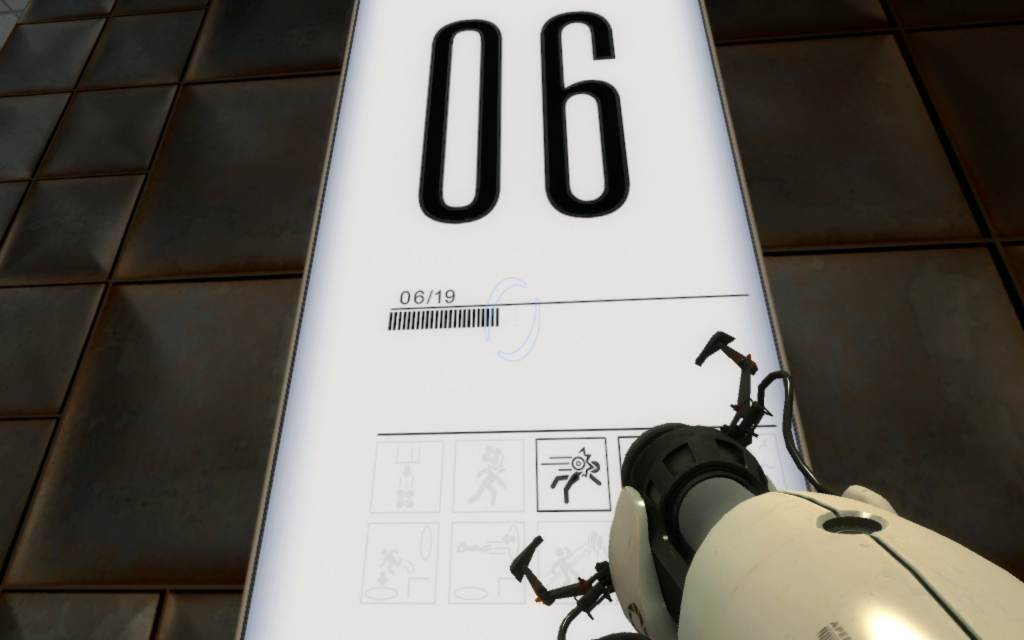
In Portal, your progress is everywhere. Every level is marked out of 19, so at all times you are thinking about 19 as the last test chamber you will have to perform. This is incredibly valuable to know how far you are in the game at all times and helps you effectively understand what the output is for your time input. In fact, as I look back at the screenshots I took through my playing of Portal, it appears as if I took one nearly every time I came across one of these progress bars. I can’t imagine it was for much more than the pride factor that came along with knowing what I had accomplished in a short amount of time.
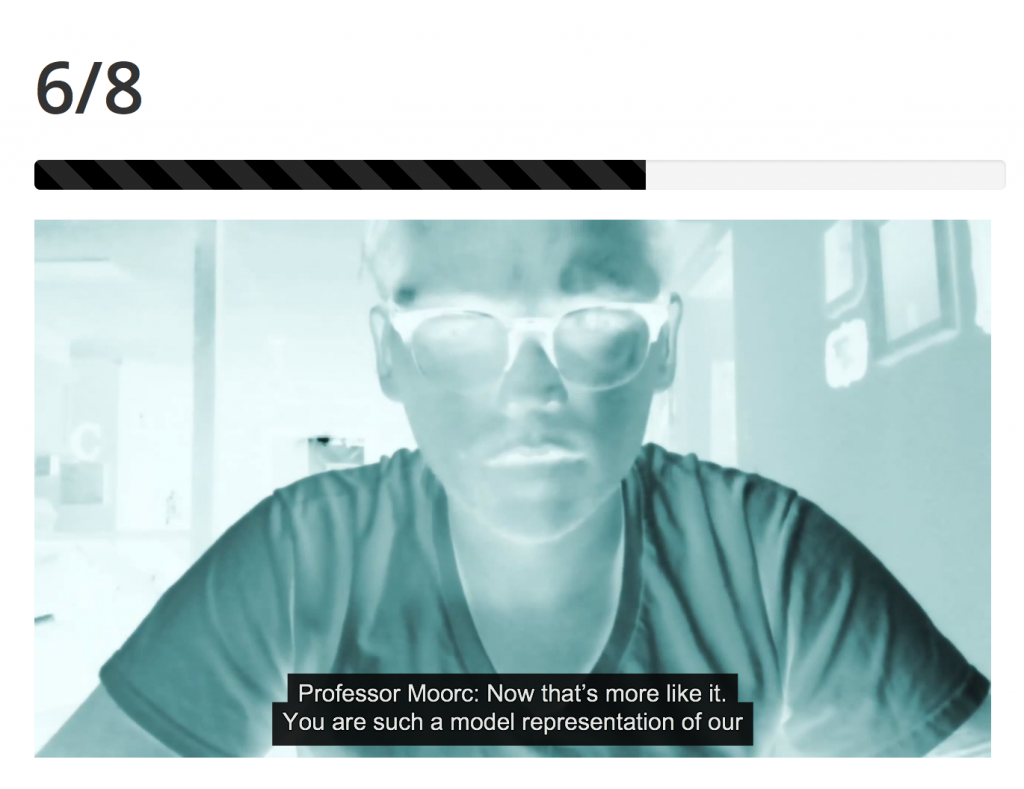
Similarly, I have added progress bars to each level in NS3000 so students can visualize their progress throughout the lesson. This also helps alleviate what the syllabus usually does: tell you the path to your grade. With the progress bar, it’s pretty easily spelled out for you. If you feel comfortable receiving an 80, you’ll know when you’ve complete 80% of the tasks necessary to receive an 80. Having “grades” baked into the game gives you one less reason to have that almighty syllabus.
5. Finding Space for Humor
One thing that I really latched onto in Portal was the character of GladOS. GladOS is this computer-aided guiding voice that exists throughout the game alongside you. She encourages you, she mocks you, she has pride in you. I can’t explain it, but there’s a strange bond you end up having formed with the voice by the end of the game. Inevitably you go through this inner struggle at the end when you are faced with the challenge of having to defeat this voice. But more than all I enjoyed the humor that came with GladOS. I’m sure there is some great psychology studies on the need for comic relief in our society. I remember after 9/11 people talking about how necessary it was to have Saturday Night Live, David Letterman, or Jon Stewart back on again to make us laugh. Of course, in the classroom you have to be serious and “authoritative.” If at any point you try to be humorous there are usually more undergraduate students laughing at you than with you. It’s tough balance to attempt to be humorous and deeply respected. Enter Professor Moorc. A lot of what GladOS did best is laced within him. His videos are short and mysterious as he uses a voice scrambler. His humor isn’t great but enough to make his evilness slightly lovable. I add captions just in case you can’t understand but he throws in some pretty good zingers about higher education so people can laugh a little bit along the way:
“If you want to be able to produce publications which will win awards and make the college look prestigious, I mean you more employable, all you will have to do is complete a few InDesign tasks this semester.” “I think this time we should add color. How about you make it the color of ice cold heart: blue.” “Add the University of God’s Country logo to it so every one can know that all the good work being produced by you is because our institution exist. That should stop the defunding of public education, right?”
The truth of the matter is, funny is always less boring. And, as the instructor, I get the best of the both world. The alternate ego Moorc is so far removed from me, the character is effectively not me and adds a barrier. It’s hard to be mad at the slightly off balance green guy with the weird voice telling you that you’ll have to redo your project that he put in the paper shredder because now he wants a different color. In a classroom, I could certainly use this to my advantage. Please feel free to check out the NS3000 site and walk through the different “levels.” It’s all the good and bad of “minimally viable product” meaning students literally could use the site tomorrow to upload documents to me if I so wanted them to do so (which is kind of a neat feeling!) but definitely has a lot of room for growth (some built in logic, walk through tutorials, a personal project dashboard, etc.). I really could see myself building out multiple modules in this type of format so going through the process was deeply beneficial. Whether I use the NS3000 site or not, I really will change the pedagogical approach to teaching the technology and go “bottom-up” rather than “top-down.” And all of this simply from playing video games!
Walkthrough Video
https://youtu.be/AhQkMnhK9wk